Vitamin D3: cholecalciferol, foods, and the body
D3, or cholecalciferol, is a form of vitamin D found in foods and produced by the skin under certain conditions. Understand its relationship with D2 without turning a chemical form into a universal superiority claim.
3 min read
Understand the nutrient
Cholecalciferol is another name for vitamin D3. It occurs in certain animal foods, can be used in fortification, and is produced in the skin through a process involving ultraviolet radiation. These different origins explain why a food table alone cannot describe an individual person’s vitamin D status.
What it does
Choose an icon to explore its role. Use the arrow keys to move between icons.
Normal mineralization
Vitamin D functions include processes needed for bone mineralization alongside mineral availability and other relevant factors throughout the body.
A closer look
One form, several origins
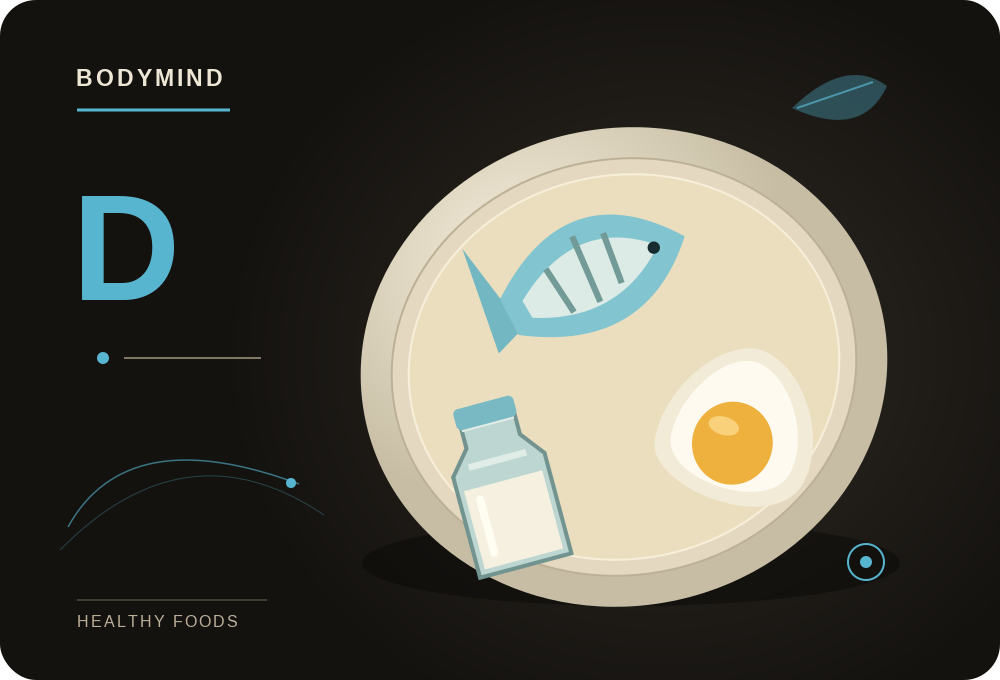
D3 belongs to vitamin D, as does D2. Fatty fish and egg yolks are food examples, with differing amounts across species and products. Production in skin belongs to another context: it is not a meal ingredient and cannot be added to a meal’s nutrition figure to represent a person’s total vitamin D supply.
Activation and roles in the body
Once obtained, vitamin D undergoes transformations, mainly in the liver and kidneys. Its activity supports calcium absorption and bone mineralization processes. This describes a normal physiological role; it does not mean a food treats a bone condition, replaces clinical assessment, or produces benefits in proportion to every increase in the amount consumed.
Comparisons need context
Supplement studies observe differences between D2 and D3 in raising blood markers. That finding does not make any D3-containing dish a universally superior choice. Food sources, serving, dietary pattern, and individual circumstances still matter. The name of this vitamin form also cannot establish minutes of sun exposure or doses of products for a particular person.
Where to find it
Open each food to understand its connection with this nutrient.
Fatty fish
Salmon and trout are source examples. Do not automatically transfer their values to tilapia or to every other fish species.
Egg yolk
Can contribute vitamin D, but content is not identical in every egg and depends on the composition reference being used.
Fortified foods
Check the label: not every milk, plant beverage, or dairy product has added vitamin D, and the added form can differ.
In your diet
Food information cannot calculate all skin production. This guide provides no sun-exposure duration, doses, or nutritional status assessment from one meal.
Ideas for everyday meals
- Compare fish species using their own data rather than applying one fish’s composition to every other species.
- Use labels to identify fortification and serving; a food name does not establish its vitamin form or amount.
- Treat sun exposure, testing, or supplement advice as individual decisions rather than deductions from a single dish’s composition.
Myth or fact?
Finding D3 in a dish proves that every vitamin D requirement has been met.
What to understand
One meal describes only part of the diet. Source, amount, and individual context matter; a dish alone does not establish nutritional status or indicate a need for testing or products.
Common questions
Is D3 always animal-derived?
It commonly comes from animal sources, but lichen-derived products also exist. The origin of a manufactured ingredient needs confirmation from its producer.
Can the blog determine how much sun I need?
No. Production varies with multiple factors and involves skin protection considerations. A page about food does not establish a personal exposure time.
Are D3 and calcium the same thing?
No. Calcium is a mineral and D3 is a vitamin D form. Their roles are connected, but their nutrition values are not interchangeable.
Further reading
Institutional references behind this guide.
Keep exploring
Nutrients work together. Explore other parts of that relationship.