Vitamin D2: ergocalciferol and food sources
D2, or ergocalciferol, is a form of vitamin D. Explore fungi and fortified foods, and why different forms are neither extra essential vitamins nor an automatic clinical choice.
3 min read
Understand the nutrient
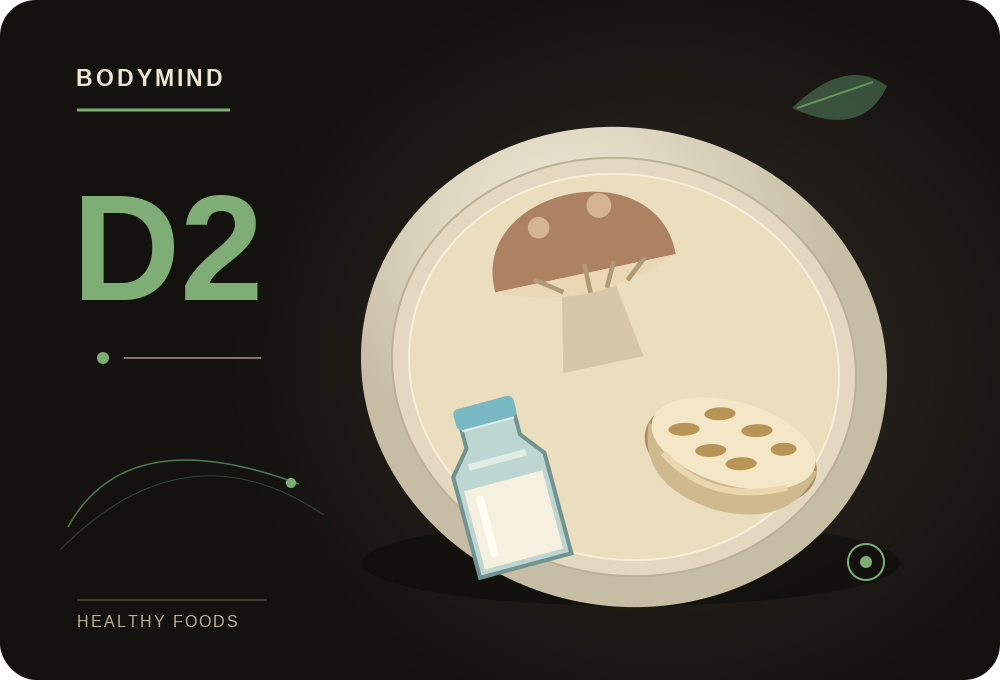
Vitamin D2, also called ergocalciferol, is one form of vitamin D. Understanding it helps explain mushrooms, fortified foods, and ingredient lists. It does not represent an additional essential vitamin: it belongs to the same nutritional topic as D3, with sources and characteristics that deserve their own explanation.
What it does
Choose an icon to explore its role. Use the arrow keys to move between icons.
Bone context
As a vitamin D form, it participates in processes that support calcium absorption and normal mineralization within the body.
A closer look
One form of vitamin D
D2 and D3 undergo processing in the body to participate in vitamin D functions. Both can contribute to this nutrient, although they are not identical molecules. The distinction helps explain an ingredient source or a composition reference without interpreting each form as an independent dietary requirement or as an entirely new vitamin.
Mushrooms: origin and treatment matter
Mushrooms can provide variable amounts of D2. Some products receive ultraviolet light treatment to increase their content, but that does not mean every mushroom sold has the same amount. Species, cultivation, and processing matter. A food photograph or its appearance cannot replace a product label or a reference that matches the actual preparation.
Functions and reading fortified foods
Vitamin D functions include calcium absorption and normal bone maintenance. A fortified food may contain D2, D3, or a formulation declared by its manufacturer. Check the ingredient and serving before assigning a specific form. This guide does not turn that information into a diagnosis, a supplement choice, or advice about how long to spend in the sun.
Where to find it
Open each food to understand its connection with this nutrient.
Identified mushrooms
Content can vary considerably. Light-treatment and composition information should come from the product or from a suitable food reference.
Fortified cereals
Some products have added vitamin D. Check whether the form is identified and which serving corresponds to the stated label amount.
Fortified beverages
Plant or dairy beverages are not uniformly fortified. Their product category alone does not demonstrate that vitamin D2 is present.
In your diet
D2 and D3 belong to the same vitamin. Product form and amount need confirmation; this guide does not select supplements or interpret blood tests.
Ideas for everyday meals
- Check the manufacturer’s stated form before classifying the vitamin D in a food specifically as vitamin D2.
- Include mushrooms within varied meals without assuming high vitamin D content in every species or preparation.
- Compare equivalent servings and keep total vitamin D information separate from information identifying one specific form.
Myth or fact?
D2 has no function because D3 appears more often in commercial recommendations.
What to understand
Both forms can contribute to vitamin D. Studied differences do not make D2 useless or allow an individual supplement decision to be made from a page about food.
Common questions
Is D2 an extra vitamin beyond vitamin D?
No. It is a vitamin D form. A separate guide makes searching easier but does not increase the number of recognized essential vitamins.
Is every mushroom rich in D2?
No. Amounts vary with the product and its treatment. A general reference cannot assign the same value to every mushroom sold or prepared.
Does a vitamin D value tell me the D2 amount?
Only when the reference identifies that form. A total vitamin D figure does not justify separating D2 and D3 through an assumed estimate.
Further reading
Institutional references behind this guide.
Keep exploring
Nutrients work together. Explore other parts of that relationship.