Manganese: energy, cells, and bones
Manganese takes part in energy use and protection of cells from damage. It is also needed for functions related to bone formation and clotting. It occurs in many everyday plant foods.
3 min read
Understand the nutrient
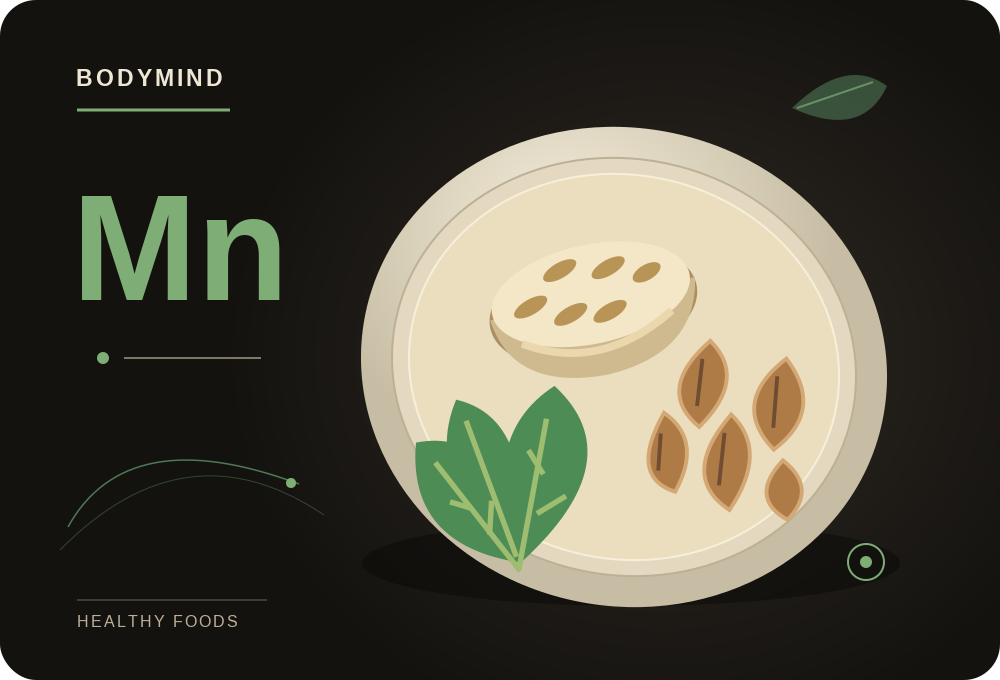
Manganese is different from magnesium despite their similar names. It supports energy processes, bone formation, and cellular protection. Various plant foods supply it, making everyday combinations useful sources without depending on a supposedly exceptional food.
What it does
Choose an icon to explore its role. Use the arrow keys to move between icons.
Using energy
Supports body reactions involved in using energy supplied by foods.
A closer look
Reactions working together
Manganese supports processes helping the body use energy and protect cells from damage. It is also needed for functions related to bones, clotting, and immunity. These are normal roles in reactions rather than absolute protection. A meal’s manganese content cannot predict greater disease resistance or a specific immediate effect.
A mineral in everyday foods
Brown rice, oats, lentils, nuts, and leafy vegetables are example sources. Some fruit, such as pineapple, contributes too. Variety distributes the nutrient across meals alongside fiber and other minerals. Equivalent-portion comparisons explain this contribution without making the most concentrated ingredient compulsory for everyone.
Manganese is not magnesium
Both can occur in one meal and support related processes, but they are different elements. Each has its own sources, amounts, and table entry. Their values should not be combined as one nutrient or substituted for each other. Checking full names and units helps avoid confusion, particularly with small numbers.
Where to find it
Open each food to understand its connection with this nutrient.
Brown rice and oats
Whole grains supply manganese and different fibers; preparation and served amount affect their contribution.
Lentils and other legumes
Offer everyday meal choices combining the mineral with plant protein and other food components.
Pineapple
One fruit that can contribute, showing that sources extend beyond grains and seeds.
In your diet
Whole grains and legumes offer ways to include it in varied meals. Although involved in bone formation, manganese works with other nutrients; one mineral does not define meal quality or bone health.
Ideas for everyday meals
- Read the full name to distinguish manganese from magnesium in the table.
- Vary whole grains, legumes, leafy vegetables, and fruit rather than depending on one source.
- Use the value as composition information without reading cellular protection as a promise against disease.
Myth or fact?
Manganese and magnesium are two names for the same nutrient.
What to understand
The names resemble each other but describe different minerals. Each table entry needs its own identity and unit.
Common questions
Can I substitute manganese for magnesium when reading?
No. They are different minerals even in similar foods. The amount of one does not reveal the other’s amount or role.
Does an energy role mean manganese provides calories?
No. It supports processes that use energy but does not supply calories like macronutrients. These are different kinds of information.
Do only nuts contain manganese?
No. Whole grains, legumes, leafy vegetables, and some fruits contribute too. Variety brings the mineral into different meals and snacks.
Further reading
Institutional references behind this guide.
Keep exploring
Nutrients work together. Explore other parts of that relationship.