Magnesium: muscles, nerves, and cell synthesis
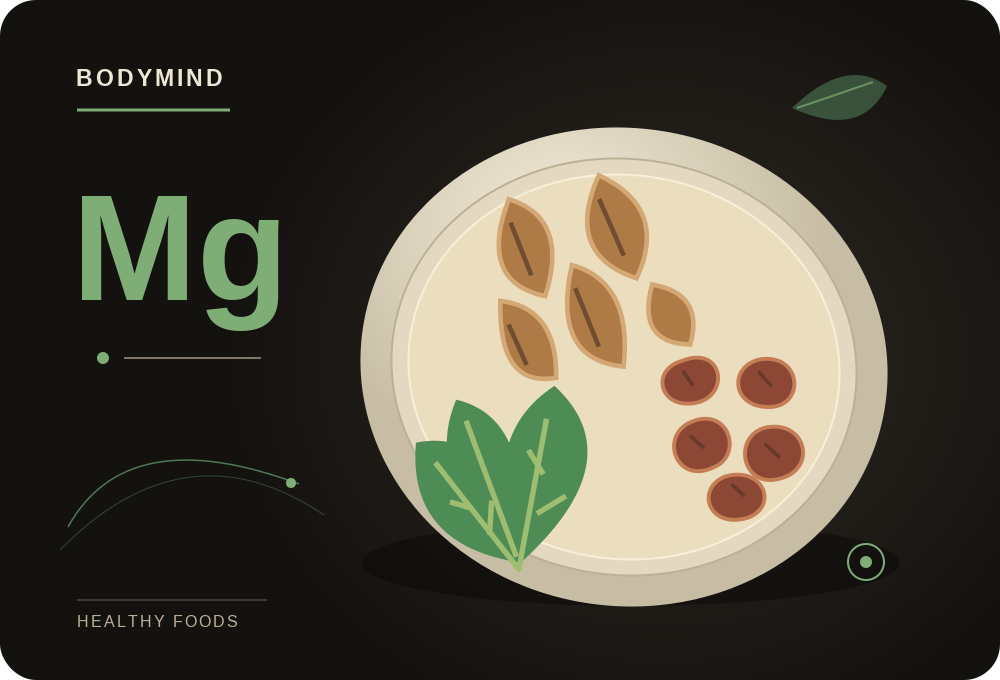
Magnesium takes part in many body processes, including muscle and nerve function. It also contributes to making protein, bone, and DNA. It occurs in different plant foods and some dairy foods.
3 min read
Understand the nutrient
Magnesium contributes to many body reactions, including muscle and nerve processes and cellular structures. It occurs in everyday foods such as beans, whole grains, leafy vegetables, and seeds. Its many roles do not make it a single solution; they help explain the value of food variety.
What it does
Choose an icon to explore its role. Use the arrow keys to move between icons.
Muscles and nerves
Supports regulation of muscle activity and normal nervous-system communication.
A closer look
A participant in cellular reactions
Cells depend on different nutrients for organized reactions. Magnesium supports protein production, genetic material, and muscle and nerve function. It also contributes to bone structure. These activities occur alongside other body components, rather than as a separate effect measurable by how someone feels after one meal.
Sources across plant foods
Legumes, nuts, seeds, whole grains, and green vegetables offer magnesium sources. Milk and yogurt can contribute too. Because these foods differ in other nutrients, alternating sources broadens dietary composition. These varied groups allow everyday combinations such as brown rice and beans without depending on a supposedly special or compulsory food.
A small amount does not mean a small role
Magnesium is reported in milligrams rather than the grams used for macronutrients. Comparing numbers without their units can mislead. A larger serving changes the amount present but does not establish a proportionally greater benefit. The value describes food’s contribution within a routine involving many other nutrients and factors.
Where to find it
Open each food to understand its connection with this nutrient.
Beans and other legumes
Bring magnesium into everyday meals alongside fiber and plant protein.
Whole grains
Brown rice and oats offer different sources; amounts vary by product and portion.
Nuts and seeds
Contribute in small food portions and also supply fat, so overall composition matters.
In your diet
Brown rice, legumes, and vegetables can bring different sources to one plate. A role in muscle function does not mean that a magnesium-containing meal treats cramps; symptoms require their own assessment.
Ideas for everyday meals
- Vary legumes, whole grains, and vegetables rather than depending on one source.
- Check the milligram unit before comparing with nutrients shown in grams.
- Consider food and portion: the same species may be raw, cooked, or part of a recipe with additions.
Myth or fact?
A mineral with many roles balances the body on its own.
What to understand
Magnesium works with other nutrients. Its dietary presence belongs to a whole pattern rather than an isolated solution.
Common questions
Are magnesium and manganese the same?
No. They are different minerals with similar names and roles in some related processes. Each has its own table entry.
Does a magnesium food guarantee relaxation?
No. A role in muscle and nerve function does not mean a predictable immediate sensation after eating.
Do only seeds supply magnesium?
No. Beans, whole grains, leafy vegetables, nuts, and some dairy also contribute, allowing varied combinations.
Further reading
Institutional references behind this guide.
Keep exploring
Nutrients work together. Explore other parts of that relationship.