Vitamin K2: menaquinones and varied sources
K2 groups forms of vitamin K called menaquinones. Some occur in fermented and animal foods. Understand this group’s diversity and the limits of turning molecular differences into a universal recommendation.
3 min read
Understand the nutrient
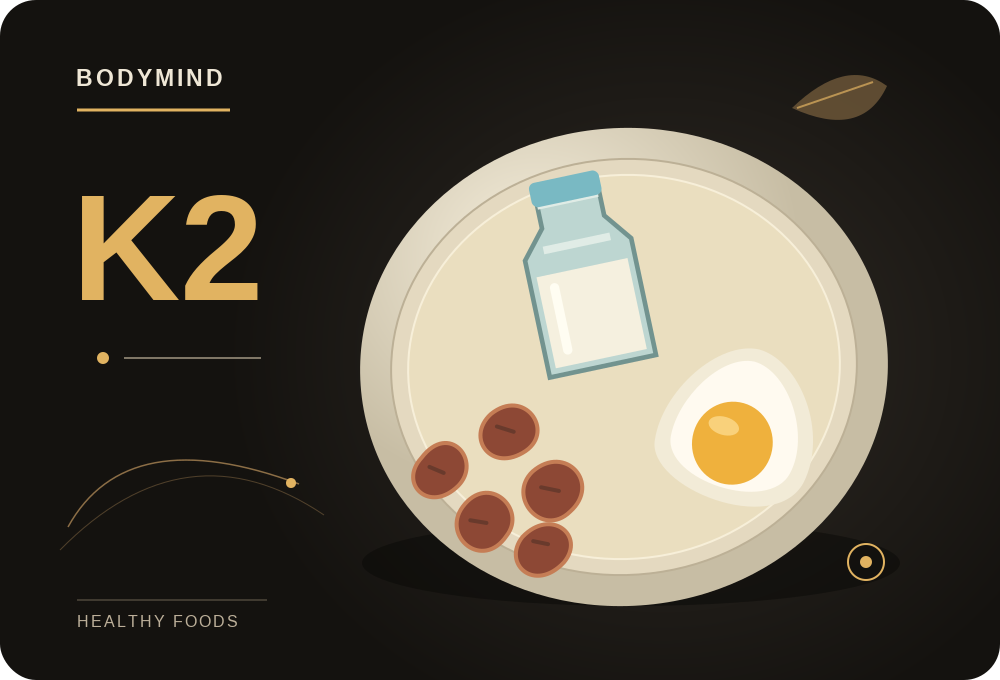
Vitamin K2 names a group of forms called menaquinones. They broaden the topic beyond the green leaves associated with K1. Fermented foods and certain animal products can contribute, but the diversity of forms requires care: K2 is not an extra vitamin or a promise of superior benefit in every situation.
What it does
Choose an icon to explore its role. Use the arrow keys to move between icons.
Clotting proteins
Vitamin K functions include activating proteins needed for normal clotting without turning individual foods into a treatment for bleeding problems.
A closer look
Menaquinones: a family within vitamin K
Names such as MK-4 and MK-7 identify different forms within the K2 group. Many menaquinones are associated with bacterial activity, including fermentation; MK-4 can also be formed in the body from K1. It is therefore incorrect to say every K2 form has the same origin or that all fermented foods offer equivalent amounts of this nutrient.
Normal functions and limits of claims
Vitamin K participates in activating proteins involved in clotting and bone metabolism. Research on other proteins and cardiovascular health does not justify saying a K2-containing meal cleans arteries, prevents calcification, or cures a bone condition. A molecule’s biochemical role must be distinguished from a clinical benefit demonstrated for a particular person or product.
Fermentation does not guarantee a fixed amount
Natto, made from fermented soybeans, is a known menaquinone source. Certain cheeses and animal foods can also contribute, with variation between products. Bacterial cultures, processing, and recipe matter. The contribution of intestinal bacteria to meeting vitamin K needs remains uncertain and does not remove the need to consider the overall dietary pattern.
Where to find it
Open each food to understand its connection with this nutrient.
Natto
The fermented soybeans in this preparation are a known source. Other soy foods do not automatically have the same composition.
Certain cheeses
Content varies with product and fermentation. The word cheese without identification is insufficient for estimating a specific amount of vitamin K2.
Eggs and other animal foods
Can contribute vitamin K forms, but values depend on the reference, the specific product, and the serving that is actually consumed.
In your diet
Content depends on the food and production. Differences between K1 and K2 do not establish universal superiority; anticoagulant users need individual guidance rather than changes based on the blog.
Ideas for everyday meals
- Check which menaquinone a study names before applying its conclusions to every food containing vitamin K.
- Compare fermented products through their overall composition; fermentation does not guarantee a uniform amount of vitamin K2.
- When warfarin use applies, follow the healthcare team’s guidance about consistent vitamin K intake and dietary changes.
Myth or fact?
K2 moves all calcium from arteries into bones and guarantees cardiovascular protection.
What to understand
That statement turns studied mechanisms into a clinical guarantee. The role of vitamin K-dependent proteins does not establish that outcome for a food, supplement, or individual.
Common questions
Is K2 always better than K1?
There is no such universal conclusion. Forms have different characteristics and sources, and findings from a particular study do not rank the entire diet.
Does every fermented food provide plenty of K2?
No. Different microorganisms and processes create different compositions. Fermentation alone does not demonstrate a high menaquinone content in the finished food product.
Do gut bacteria guarantee all needed vitamin K?
That should not be assumed. Their contribution to requirements remains uncertain; the topic does not justify ignoring food sources or changing any prescribed medicines.
Further reading
Institutional references behind this guide.
Keep exploring
Nutrients work together. Explore other parts of that relationship.