Vitamin K1: phylloquinone and vegetables
K1, or phylloquinone, is a form of vitamin K found mainly in green vegetables. Explore the vitamin’s shared roles and the importance of food context, especially when anticoagulant guidance applies.
3 min read
Understand the nutrient
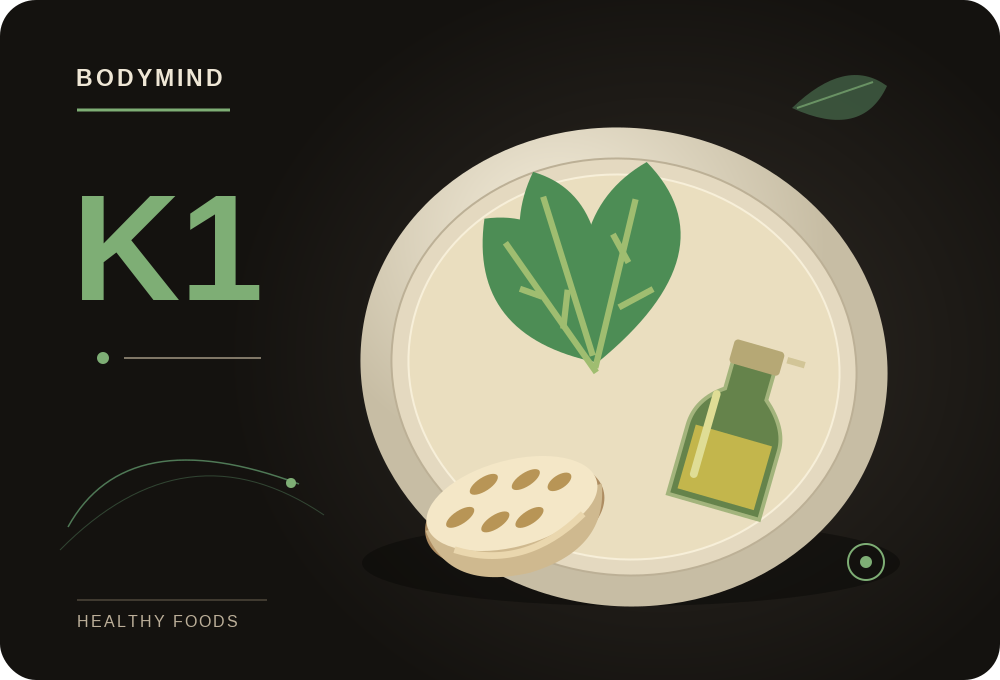
Vitamin K1, called phylloquinone, is the main vitamin K form in many diets and occurs especially in green leafy vegetables. Its technical name helps explain why vegetable variety belongs in a complete meal. K1 and K2 are forms of the same vitamin, although their sources and characteristics differ.
What it does
Choose an icon to explore its role. Use the arrow keys to move between icons.
Normal clotting
Vitamin K participates in activating clotting proteins, a normal process that should not be confused with treatment through an individual food.
A closer look
Phylloquinone and green leaves
Kale, spinach, and other leafy vegetables can provide K1. Broccoli and certain vegetable oils also contribute. Amounts depend on food, serving, and preparation; a source list cannot establish content in every vegetable mix. Varying vegetables considers fiber, taste, and other nutrients rather than choosing one leaf as a solution for the whole diet.
Proteins that depend on vitamin K
The body uses vitamin K in processes that activate certain proteins, including proteins involved in normal blood clotting. Others participate in bone metabolism. These roles do not mean eating more leaves makes blood better or that the vitamin treats bleeding. Biochemical explanations must be kept separate from symptoms, diagnosis, and decisions about medicines or supplements.
Consistency when clinical guidance applies
People using warfarin may need consistent vitamin K intake according to their healthcare team’s guidance. That is not equivalent to banning all leafy vegetables. Large, sudden dietary changes or changes in product use should be discussed with the responsible team. This guide does not change medicines or propose an individual menu for that clinical situation.
Where to find it
Open each food to understand its connection with this nutrient.
Green leaves
Kale and spinach are source examples. Preparation, weight, and recipe must match the reference when estimating the actual serving provided.
Broccoli
Adds vegetable variety and can supply K1; a vegetable mix has no fixed composition unless its actual ingredients are identified.
Vegetable oils
Some oils contain phylloquinone. The type and amount used matter alongside their culinary role and contribution to the meal’s energy.
In your diet
K1 and K2 are not extra essential vitamins. With warfarin, consistent intake and care-team guidance matter; do not remove greens or change medicines on your own.
Ideas for everyday meals
- Vary vegetables with the whole meal in mind instead of assigning every benefit to one specific leaf.
- When warfarin guidance applies, discuss major changes in leaves or products with the healthcare team before making them.
- Check whether a table specifically reports K1 or total vitamin K before comparing food sources and servings.
Myth or fact?
Everyone should avoid green leaves because they contain vitamin K.
What to understand
Leaves can be part of varied meals. Situations involving medicines require individual guidance and consistency; that does not turn an ordinary food source into something universally forbidden.
Common questions
Is K1 different from vitamin K?
K1 is a vitamin K form, not an additional vitamin. The specific name helps identify sources and interpret the available food composition references.
Must everyone using warfarin remove all vegetables?
That is not a general rule. Consistent intake and individual healthcare guidance matter; the blog does not determine food exclusions or medicine changes.
Does more K1 make clotting better?
A nutrient’s normal role does not mean increasing amounts produces additional benefits. Symptoms or concerns about clotting require their own appropriate assessment.
Further reading
Institutional references behind this guide.
Keep exploring
Nutrients work together. Explore other parts of that relationship.