Vitamin B2: riboflavin in cells
Riboflavin is vitamin B2. It helps turn food into usable energy and is important for cell activity. Its presence in different food groups makes it possible to include it in varied meals.
3 min read
Understand the nutrient
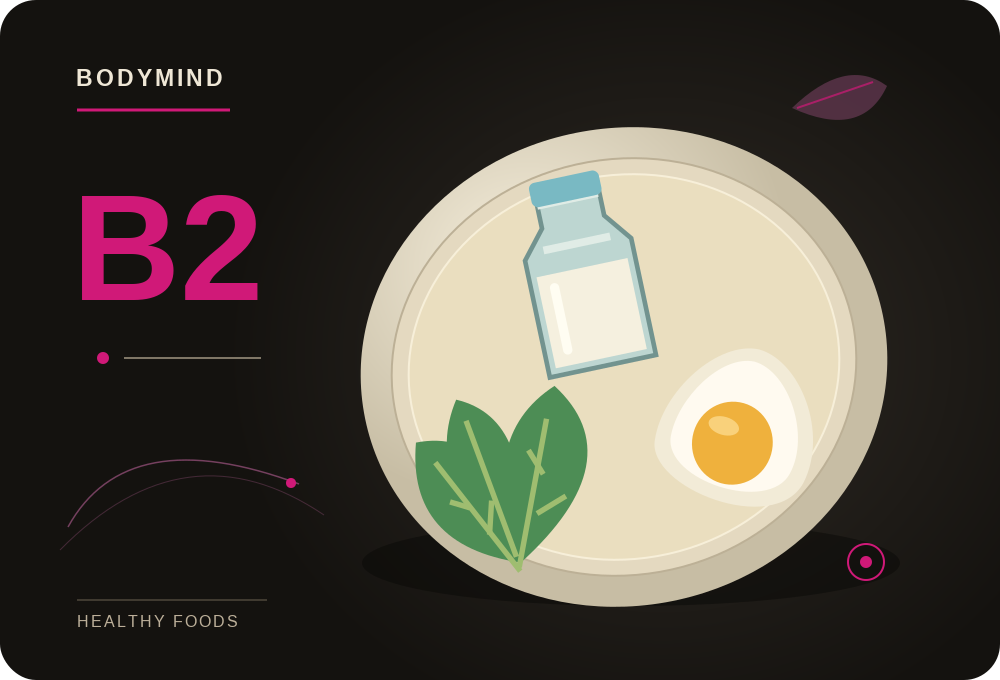
Riboflavin, or B2, often appears quietly in milk, eggs, mushrooms, and greens. Its importance lies in cellular work and energy use. Understanding it also shows how storage, variety, and product information can affect how a meal is interpreted.
What it does
Choose an icon to explore its role. Use the arrow keys to move between icons.
Energy transformations
Helps reactions that use energy from food. Its amount is not a scale of physical energy or alertness.
A closer look
A vitamin working inside cells
B2 participates in compounds that assist reactions in energy metabolism. This work happens inside cells and helps transform food components into forms the body uses. Its role differs from supplying fuel: a B2 value describes a micronutrient, while calories summarize energy from the meal’s energy-containing components.
Light is part of the storage story
Riboflavin is sensitive to light. Packaging and storage conditions therefore matter for foods such as milk. This does not require complicated routines: following storage instructions and avoiding unnecessary exposure connects nutritional knowledge with practical food care. Losses cannot be calculated simply by looking at the package or food.
Sources spread across the routine
A diet that includes dairy may obtain B2 at breakfast or snacks, while mushrooms, greens, eggs, and fortified products expand other possibilities. People avoiding one food group can pay closer attention to the others. Cooking substitutions need to consider several nutrients: replacing milk with any plant drink does not guarantee equivalent composition.
Where to find it
Open each food to understand its connection with this nutrient.
Milk and dairy foods
Can contribute riboflavin at different meals; selection and storage should consider the product’s characteristics.
Eggs and lean meat
Are animal examples that allow preparations to vary without relying on one type of dish.
Mushrooms and spinach
Add plant options and can be fillings, side dishes, or part of preparations with other foods.
In your diet
Fortification depends on the product, so check its label. When reading a meal’s table, remember that an unknown value means information is unavailable, rather than automatically meaning that riboflavin is absent.
Ideas for everyday meals
- Store milk and other products as directed, avoiding unnecessary exposure to light.
- Look for B2 opportunities across more than one meal, including plant sources when they fit your routine.
- Read plant-drink and cereal information: fortification must be documented for the product actually used.
Myth or fact?
Because the body uses B2 for energy, more B2 means more calories.
What to understand
Riboflavin participates in reactions but is not an energy-containing macronutrient. Its contribution complements foods that supply fuel, and the two values have different units and meanings.
Common questions
Is B2 found only in dairy?
No. Eggs, meat, some vegetables, and fortified products can also contribute. Planning depends on the person’s actual choices and available information about each food.
Does every breakfast cereal provide plenty of B2?
The category alone cannot establish that. Some are fortified and others are not; amounts and portions vary. Read the specific product information before comparing.
Does the table account for all preparation losses?
An estimate based on references does not track every kitchen step. Light, storage, and specific ingredients can introduce differences; the number should be understood as estimated composition.
Further reading
Institutional references behind this guide.
Keep exploring
Nutrients work together. Explore other parts of that relationship.