Selenium: thyroid and cell protection
Selenium is needed for normal thyroid function and the production of its hormones. It also takes part in DNA formation, reproduction, and cell protection, and contributes to immune functions.
3 min read
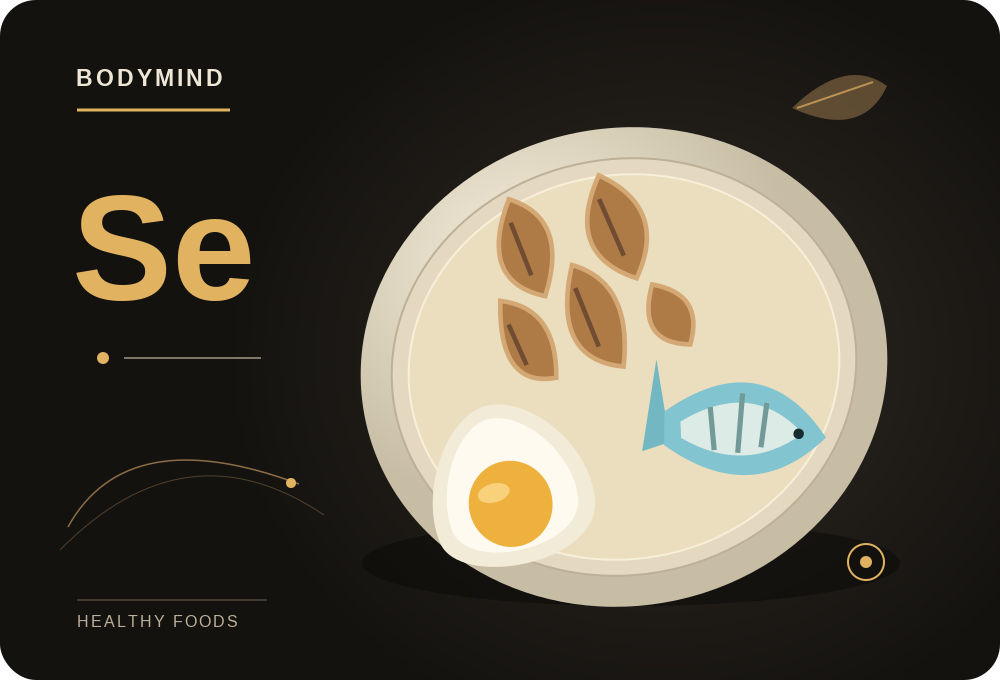
Understand the nutrient
Selenium supports thyroid function, reproduction, and cellular protection. It occurs in animal and plant foods, but amounts can vary considerably. Understanding that variation is important when avoiding treating one nut or portion as an exact universal measure.
What it does
Choose an icon to explore its role. Use the arrow keys to move between icons.
Thyroid functions
Supports processes involving thyroid hormones within normal body function.
A closer look
Small amounts, broad body roles
Selenium is needed for normal thyroid function and its hormones. It also supports DNA formation, reproduction, and processes helping protect cells. These roles do not mean that more provides extra protection or improves metabolism. It works with other components, and its functions should not become promises of individual outcomes.
Soil helps explain variation
Plant selenium depends partly on the growing soil. Foods sharing a name may therefore not have identical content. Tables provide useful references rather than analyzing every item on a plate. This matters for concentrated foods such as Brazil nuts: one nut is not a standardized dose of the mineral.
Variety rather than a fixed formula
Fish, meat, eggs, dairy, grains, and legumes may contribute. Spreading sources across meals avoids reducing selenium to one food. Notice the microgram unit too: small numbers do not make the nutrient irrelevant. The aim is understanding its dietary presence, not maximizing intake or turning a food into thyroid treatment.
Where to find it
Open each food to understand its connection with this nutrient.
Fish and seafood
Potential sources with amounts varying between species. One reference should not be applied to every fish.
Eggs and meat
Contribute selenium and other nutrients, allowing sources to be combined according to recipes and preferences.
Brazil nuts
Can be concentrated in selenium, but content varies. Each nut should not be treated as a fixed amount or eaten to maximize intake.
In your diet
The amount in plant foods varies with growing soil, so reference values are estimates. Varying sources is more informative than treating one food as a guarantee of a fixed amount or protection against disease.
Ideas for everyday meals
- Diversify sources rather than treating one nut as an exact nutrient measure.
- Check micrograms before comparing with minerals reported in milligrams.
- Interpret references as estimates, particularly for plant foods affected by growing conditions.
Myth or fact?
One nut is a precise measure that applies to everyone.
What to understand
Content varies and food is not a standardized dose. Knowing sources does not establish an individual intake amount.
Common questions
Does every Brazil nut have the same selenium?
No. Growing conditions, soil, and other characteristics can change content. One nut is not a uniform or guaranteed dose.
Does a thyroid role mean treating thyroid problems?
No. A normal nutrient role does not turn food into treatment. Meal values describe composition rather than establish an intervention.
Do only nuts provide selenium?
No. Fish, meat, eggs, dairy, grains, and legumes can contribute too, with amounts differing by source and portion.
Further reading
Institutional references behind this guide.
Keep exploring
Nutrients work together. Explore other parts of that relationship.