Trans fat: a value to reduce
Trans fats have no known health benefit and are not essential nutrients. They can result from partial hydrogenation of oils and also occur naturally in small amounts in foods from ruminant animals.
3 min read
Understand the nutrient
Trans fats are not essential nutrients and have no known health benefit. Their table entry tracks their presence rather than encouraging intake. Understanding sources and information limits helps interpret an estimate or a value that remains unknown.
What it does
Choose an icon to explore its role. Use the arrow keys to move between icons.
Read ingredients
The entry helps identify partially hydrogenated oils when they appear in declared ingredients.
A closer look
Where they can come from
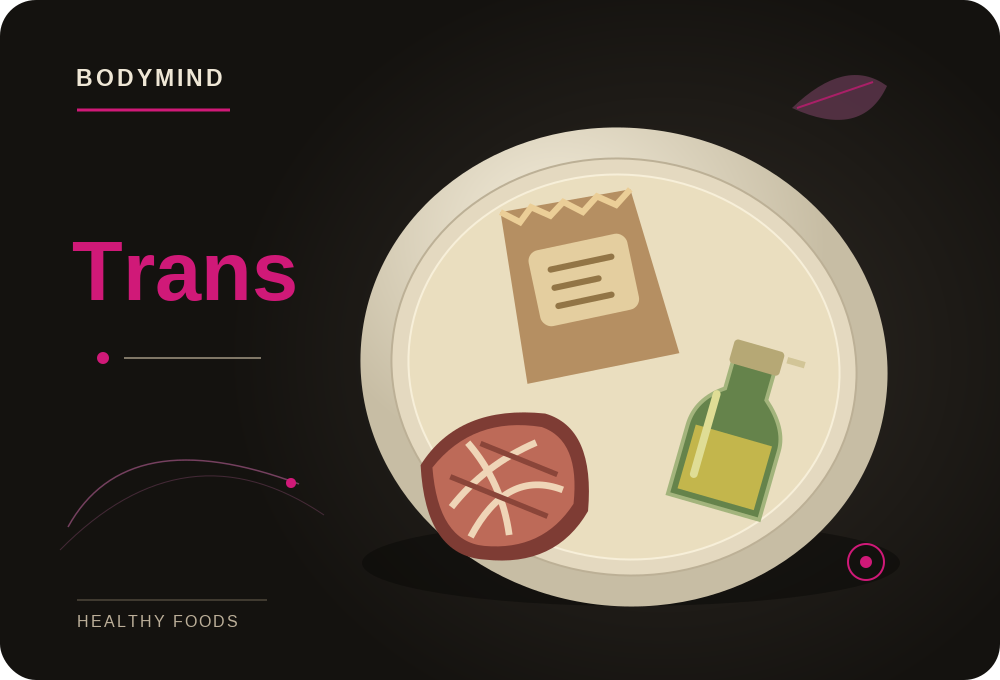
Some trans fat is produced industrially by partially hydrogenating oils. Small amounts also occur naturally in ruminant meat and dairy. These origins explain why it is not confined to one food group. Composition varies between products and may change after reformulation, so current information matters more than appearance alone.
Information for reducing exposure
WHO links trans-fat consumption with increased cardiovascular risk and supports eliminating industrially produced trans fat from the food supply. This guide explains the value and its origin without assigning benefits. Ingredient lists may identify partially hydrogenated oils. General claims do not replace the composition of a particular recipe.
Unknown does not mean absent
An incomplete table may report total and saturated fat without trans fat. Subtracting one from the other cannot reliably calculate the missing amount because other fat types exist. When the source does not report total trans fat, that gap should remain explicit. The same applies to totals based on recipes with unrecorded ingredients.
Where to find it
Open each food to understand its connection with this nutrient.
Partially hydrogenated oils
Are a possible industrial source. Their ingredient-list name is something to notice, not a recommendation.
Packaged biscuits and pastries
Some formulations may contain trans fat and others may not. Category and appearance do not replace composition information.
Ruminant dairy foods
May contain small naturally occurring amounts; natural describes origin rather than a health advantage.
In your diet
Composition varies with the product and preparation. Check ingredients and available data: a missing or partial table value does not establish that a meal contains no trans fat.
Ideas for everyday meals
- Check current product composition because recipes and formulations may change.
- Do not infer trans fat from the difference between total and saturated fat.
- Keep missing values unknown, especially when the complete recipe is unavailable.
Myth or fact?
Naturally occurring trans fat should be sought in the diet.
What to understand
Natural origin does not create a dietary need. Trans fats have no known benefit and are not essential nutrients.
Common questions
Does the body need dietary trans fat?
No. It is not considered an essential nutrient. Tracking it helps understand and reduce exposure.
Does all trans fat come from industrial foods?
No. Natural amounts also occur in ruminant foods. Origin helps explain the food without making trans fat desirable.
Does no information mean zero?
No. It may mean the nutrient was not measured or reported. Missing information should remain distinct from a documented zero.
Further reading
Institutional references behind this guide.
Keep exploring
Nutrients work together. Explore other parts of that relationship.