B complex: meet the eight vitamins in the family
B complex is the collective name for eight recognized vitamins: B1, B2, B3, B5, B6, B7, B9, and B12. They have related roles but are not interchangeable, an extra vitamin, or a complete number sequence.
4 min read
Understand the nutrient
B complex is the name of a family of eight vitamins, each with distinct roles and food sources. Understanding the group helps explain nutrition without imagining one vitamin that meets every need. This guide connects the topics and shows when to consult the page for an individual vitamin.
What it does
Choose an icon to explore its role. Use the arrow keys to move between icons.
Using food
Different B vitamins support steps in metabolism. This involvement does not add calories or turn a meal into a stimulant.
A closer look
Which are the eight vitamins?
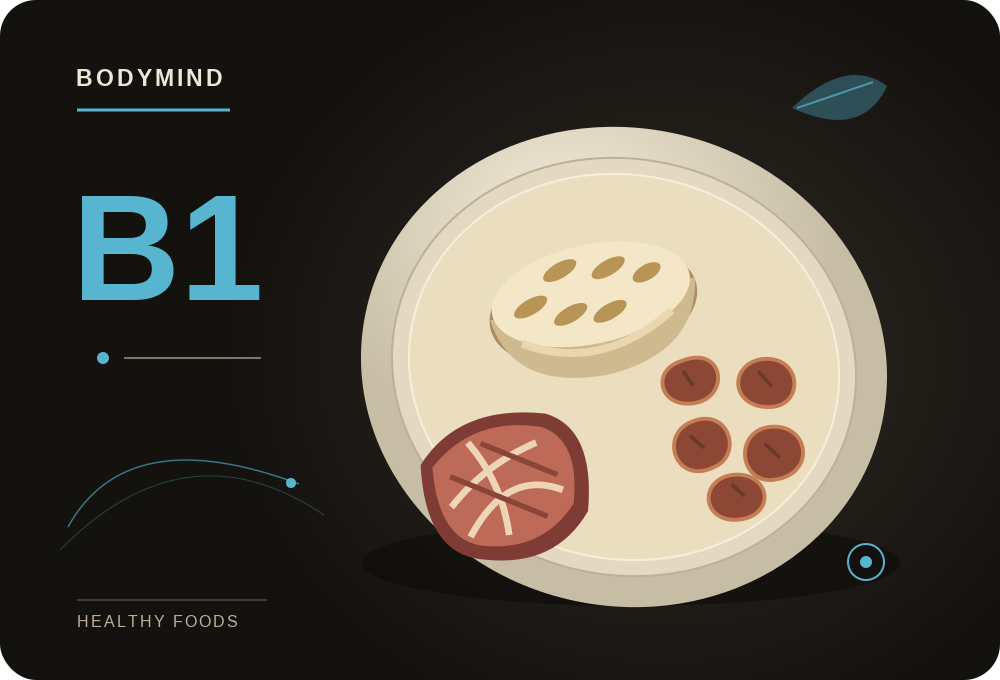
The family includes B1, thiamin; B2, riboflavin; B3, niacin; B5, pantothenic acid; B6; B7, biotin; B9, folate; and B12, cobalamin. The numbering has a history and does not need to form an unbroken sequence. Older names such as B4 or B8 do not represent additional essential vitamins in this classification. These are eight of the 13 recognized essential vitamins, rather than a fourteenth vitamin called B complex.
Supporting metabolism does not mean supplying calories
B vitamins participate in reactions that allow the body to use food. Calories, however, come from the energy-yielding nutrients in the diet; a vitamin is not fuel on its own. The group also includes roles related to blood cells, the nervous system, and making genetic material. These roles belong to different vitamins and do not demonstrate that a product will increase energy or alertness for everyone.
Food variety and reading labels
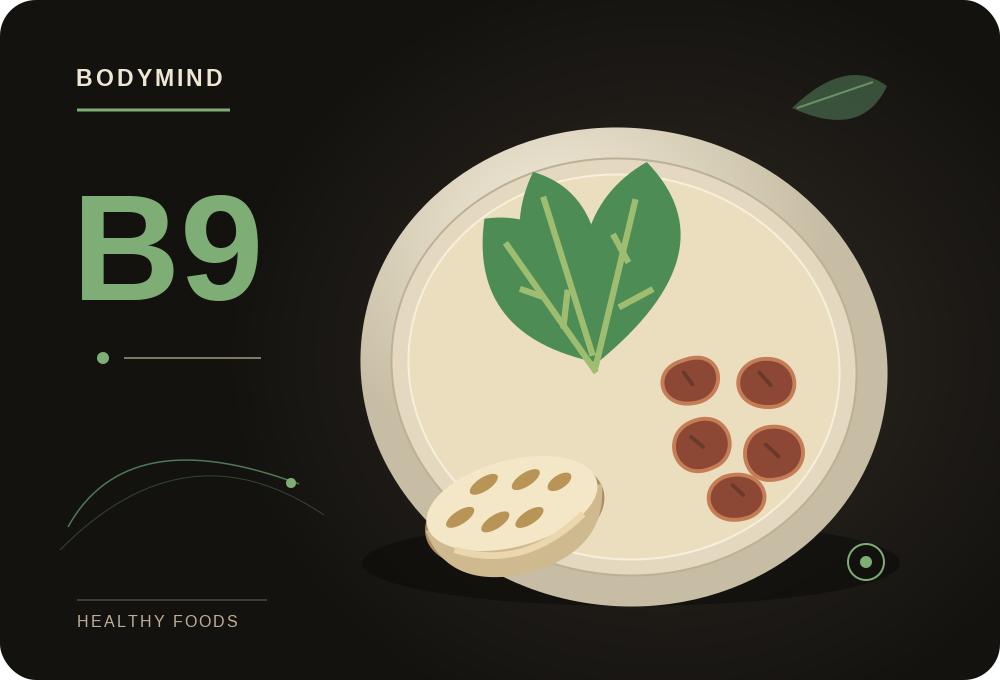
Beans, leafy vegetables, grains, eggs, meat, and dairy contribute in different ways. Folate and B12 illustrate why the family should not be treated as one substance: leaves and legumes provide folate, while dietary B12 occurs naturally in animal foods. Plant products can have added B12, but this must be confirmed on the label. A food or supplement name does not automatically tell you all eight amounts.
Where to find it
Open each food to understand its connection with this nutrient.
Beans and leafy vegetables
These are examples of foods providing folate and other nutrients. They are not reliable natural B12 sources simply because they contain some B vitamins.
Fish, eggs, and dairy
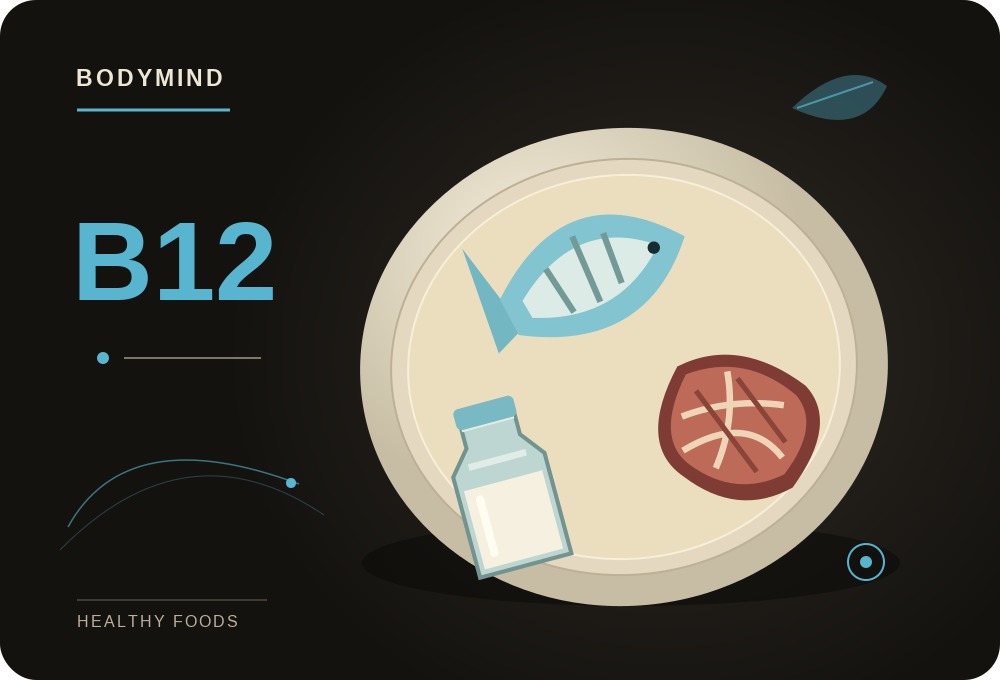
Animal foods can contribute B12 and other B vitamins. The amount depends on the food, serving, and composition reference being used.
Grains and fortified products
Some products contain added vitamins. Check which ones appear on the label: fortification with one vitamin does not establish that all eight are present.
In your diet
Missing B4 or B8 numbers do not represent gaps in recognized essential vitamins. Historical and commercial names do not create new vitamins; choline has its own classification.
Ideas for everyday meals
- Use the eight-vitamin index to research a specific question, such as B12 sources or the difference between folate and folic acid.
- Compare products using the stated vitamin and the same serving size; the term B complex alone does not allow their composition to be compared.
- When planning meals, vary food groups and consider the whole day rather than expecting a single meal to supply every nutrient.
Myth or fact?
Any food containing one B vitamin already supplies the complete complex.
What to understand
The eight vitamins do not occur in fixed proportions. Composition must be checked nutrient by nutrient; food variety and specific information are more useful than assuming a complete package.
Common questions
Is B complex a single vitamin?
No. The name groups eight distinct vitamins. They have metabolic connections, but their sources, amounts, and requirements cannot be summarized in a single B-complex value.
Does more B complex mean more energy?
A metabolic role does not establish that effect. For example, B12 does not improve energy or endurance in people already getting enough; tiredness alone does not identify a deficiency.
Does a food with B9 also have B12?
Not necessarily. Folate and B12 are different nutrients. To assess a product or recipe, look for specific data for each vitamin and check whether fortification is stated.
Further reading
Institutional references behind this guide.
Keep exploring
Nutrients work together. Explore other parts of that relationship.