Beta-carotene: a plant precursor of vitamin A
Beta-carotene is a carotenoid the body can convert into vitamin A. Carrots, squash, and greens help explore this relationship without assuming equal color, portions, or conversion across foods.
3 min read
Understand the nutrient
Beta-carotene is a carotenoid pigment that the body can convert into vitamin A. It occurs in orange vegetables and also in green leaves. Understanding this form helps interpret color and composition without assuming every pigment is vitamin A or that a nutritious meal must have one particular color.
What it does
Choose an icon to explore its role. Use the arrow keys to move between icons.
A route to vitamin A
Conversion can contribute to vitamin A functions, including normal vision, without guaranteeing a noticeable change after eating one particular meal.
A closer look
Provitamin A is not ready-made retinol
The name provitamin indicates that a substance can become a vitamin after processing in the body. Beta-carotene and retinol therefore do not represent the same composition measurement. Not every carotenoid has this activity. A table identifying the pigment gives different information from a table reporting total vitamin A, and those figures must not simply be added together.
Color, variety, and preparation
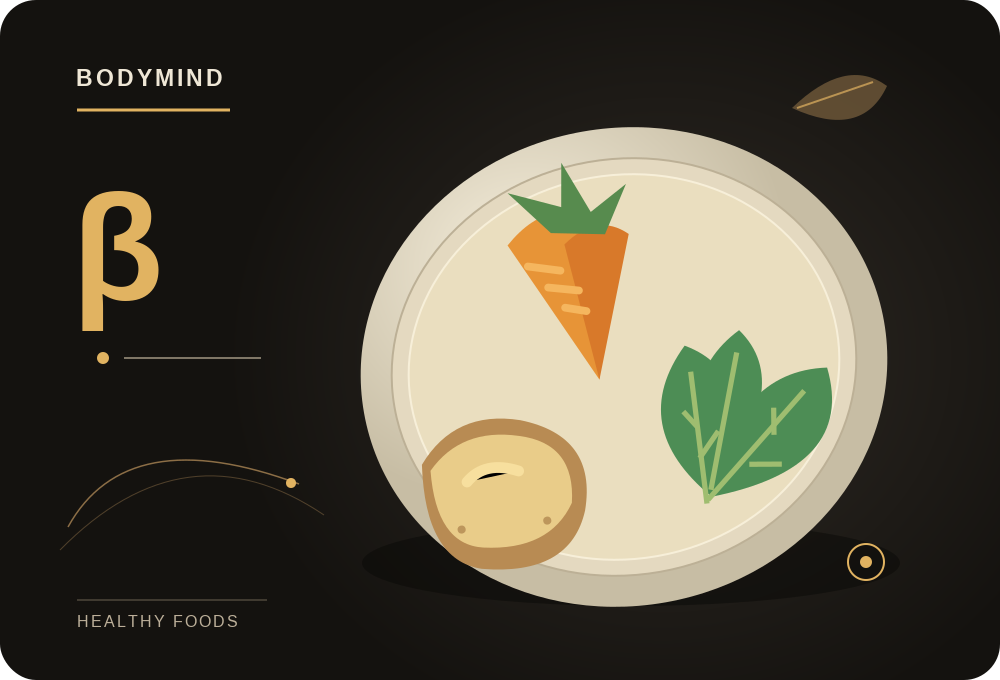
Carrots, squash, and some orange-fleshed sweet potatoes illustrate known sources. Green leaves can also contain beta-carotene even when chlorophyll dominates their appearance. Species and recipe affect composition; looking at color cannot calculate an amount. Meal variety also includes texture, other nutrients, and preferences without making less colorful foods automatically inappropriate choices.
Vitamin A activity and limits of claims
Vitamin A formed from precursors participates in roles such as normal vision and immune function. This does not mean a carrot serving corrects difficulty seeing or prevents infections. Research and cautions concerning beta-carotene supplements need the context of studied products and circumstances; they are not equivalent to eating vegetables within a varied dietary pattern.
Where to find it
Open each food to understand its connection with this nutrient.
Carrots
Are a familiar example, but variety, serving, and preparation matter. One recipe’s data do not describe every possible carrot preparation.
Squash and orange sweet potato
Color and species help identify the food, but its nutrition value depends on a specific reference and the actual prepared weight.
Dark green leaves
Can supply carotenoids despite not looking orange. Green color does not indicate that these foods lack precursors of vitamin A.
In your diet
Pigment does not measure the amount used by an individual. Food data and supplement research are different contexts; this guide does not recommend beta-carotene supplements.
Ideas for everyday meals
- Combine vegetable colors and types without treating one appearance as proof of a particular composition or benefit.
- Read the form name and unit before comparing beta-carotene with vitamin A figures from different food tables.
- Distinguish foods from supplements when interpreting research; form, amount, and context can differ from those of a meal.
Myth or fact?
The more orange a meal looks, the more it improves vision.
What to understand
Color does not measure serving, conversion, or an individual response. Provitamin A sources can contribute to variety without a promise to correct a person’s visual difficulty.
Common questions
Does every carotenoid become vitamin A?
No. Only some have provitamin A activity. The family includes different pigments, and a collective name does not make their functions interchangeable.
Can green leaves also contain beta-carotene?
Yes. Other pigments may dominate their appearance. The absence of orange color does not establish that the food has no beta-carotene present.
Can I add beta-carotene to total vitamin A?
Not directly. Total vitamin A may already include precursor activity. Adding fields without understanding their calculation method can count the same contribution twice.
Further reading
Institutional references behind this guide.
Keep exploring
Nutrients work together. Explore other parts of that relationship.