Folic acid: a form of vitamin B9
Folic acid is a folate form used in fortified foods and supplements. Its relationship with vitamin B9 involves source, availability, and unit differences that help interpret a label without creating an individual prescription.
3 min read
Understand the nutrient
Folic acid is a vitamin B9 form used in fortification and supplements. It is related to folate, but the names do not describe exactly the same dietary origin. Understanding the difference helps read flour, cereal, and food tables without assuming every bean or leaf contains added folic acid.
What it does
Choose an icon to explore its role. Use the arrow keys to move between icons.
DNA and RNA
Vitamin B9 participates in processes needed to produce genetic material alongside other molecules and conditions within cells throughout the body.
A closer look
Folate is the broader term
Folate groups vitamin B9 forms, including those naturally present in foods. Folic acid identifies a specific form used in fortified products and supplements. The distinction does not create an additional vitamin. When reading a table, notice whether it reports total folate, added folic acid, or another measurement that accounts for differences in availability.
Genetic material and cell division
Folate functions include processes involved in DNA and RNA production and amino acid metabolism. Its importance extends to growth and cell renewal. Its relevance to pregnancy planning is recognized, but a food blog does not determine individual care. Fortified foods do not automatically replace specific guidance or establish that all personal requirements have been met.
Fortification needs confirmation
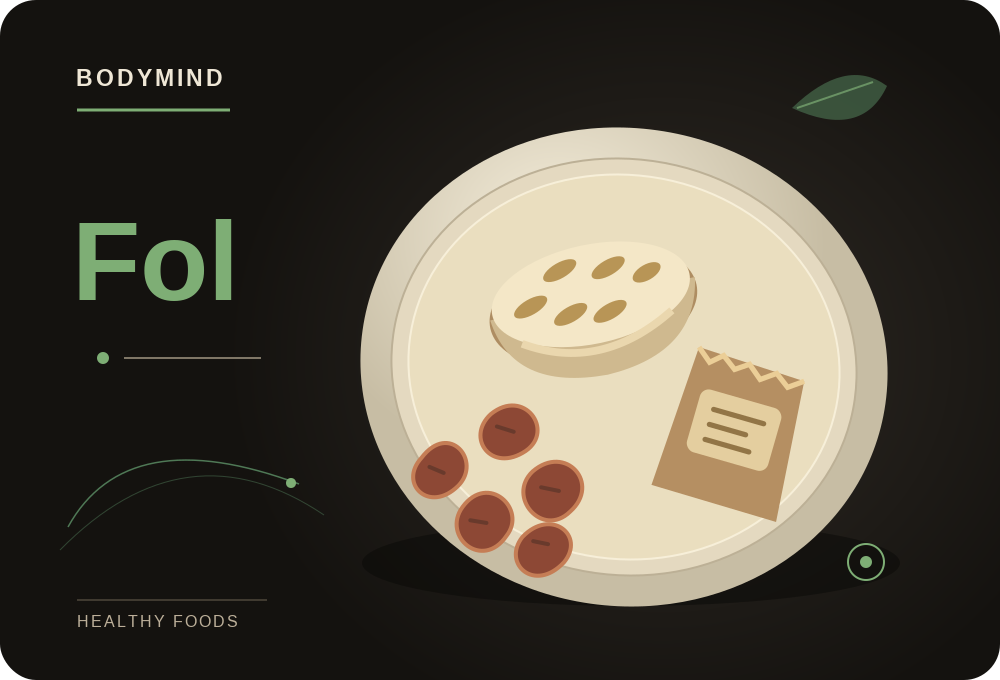
Flours and cereals may have added folic acid according to the product and applicable rules. Check the label and ingredient reference; a value from one brand or country cannot be transferred to all similar foods. Leaves, beans, and other natural sources contribute folate, but that does not establish the presence of the same added form used in fortified products.
Where to find it
Open each food to understand its connection with this nutrient.
Fortified flours
Presence should be confirmed for the product. Weight and final recipe matter when estimating the contribution made by a fortified ingredient.
Cereals with declared fortification
Compare labels using equivalent servings and check the stated form; different cereals do not automatically have the same folic acid content.
Beans and vegetables: natural folate
Help explain the distinction between natural sources and manufactured addition. They should not be labeled as folic acid without specific identification.
In your diet
Pregnancy and reproductive planning involve specific guidance. This guide explains the form without replacing care, providing doses, or treating a fortified food as automatically sufficient.
Ideas for everyday meals
- Look for a declaration of addition and the unit before comparing folic acid with folate from natural sources.
- Consider food across the day; one fortified ingredient does not summarize variety or the entire contribution of vitamin B9.
- For pregnancy planning or questions about products, seek individual guidance rather than deriving a personal course from the blog.
Myth or fact?
Any fortified food removes the need for all vitamin B9 guidance when planning pregnancy.
What to understand
Fortification is a food characteristic, not an assessment of a person. Pregnancy planning involves its own guidance; this page does not prescribe products or conclude that one meal meets every requirement.
Common questions
Are folic acid and folate always interchangeable words?
Not exactly. Folate is the broader term for vitamin B9; folic acid identifies a specific form often used in the fortification of foods.
Do beans contain added folic acid?
Naturally occurring folate does not mean folic acid was added. That information depends on an identified product, its label, and the process used.
Why do some tables use folate equivalents?
Those measures account for differences in how forms are available. Figures with different units or methods should not be compared or added without checking their meaning.
Further reading
Institutional references behind this guide.
Keep exploring
Nutrients work together. Explore other parts of that relationship.