Sodium: essential roles and attention to excess
Sodium is needed for fluid balance and transmission of nerve impulses. The more common dietary concern is excess, which is linked to increased blood pressure. Table salt is an important source, but not the only one.
3 min read
Understand the nutrient
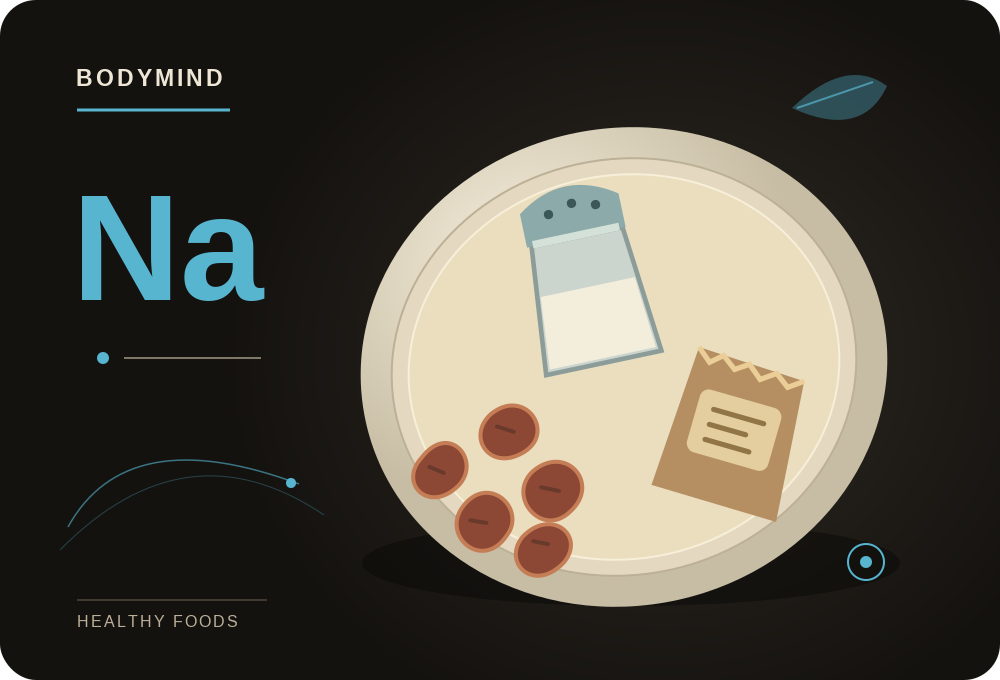
Sodium has normal body functions, but excess dietary intake deserves attention. Table salt is an important source, though not the only one. Understanding a meal means distinguishing ingredients’ natural sodium from sodium introduced through salt, sauces, and seasonings.
What it does
Choose an icon to explore its role. Use the arrow keys to move between icons.
Fluid balance
Sodium supports body-fluid balance, which is not a reason to seek more salt.
A closer look
Needed does not mean more is better
Sodium helps maintain fluid volume, transmit nerve impulses, and support cell function. At the same time, high-sodium diets are associated with raised blood pressure. These facts do not conflict: a nutrient can be needed without greater intake offering advantages. This guide explains context rather than setting an individual intake target.
Visible salt is only part of the story
Bread, processed meats, cheese, sauces, and prepared seasonings can contribute even when food does not taste especially salty. Milk, meat, and other foods also contain natural sodium. Salt and sodium are not equivalent measurements: table salt contains sodium and chloride. The milligram entry reports sodium from the sources that are known.
An incomplete recipe can miss an important contribution
A reference for unsalted cooked rice or unseasoned meat does not automatically describe the final dish. Cooking salt and sauces must be documented to enter the estimate. A low partial total therefore does not establish that a meal is low in sodium. Recognizing the gap is more informative than presenting an incomplete number as complete.
Where to find it
Open each food to understand its connection with this nutrient.
Salt and sauces
May be added in small ingredient amounts yet substantially change sodium composition.
Bread and prepared products
Sodium may be present without a strongly salty taste. Declared composition is more informative than taste alone.
Meat and processed meats
Fresh meat and cured or seasoned products are not equivalent. Processing and recipes may add sodium sources.
In your diet
Salt and cooking seasonings may be absent from ingredient references. A partial sodium value therefore does not represent the final total or guarantee that a meal is low in salt.
Ideas for everyday meals
- Consider salt, sauces, and seasonings when interpreting the final preparation.
- Compare similar products and portions rather than relying only on salty taste.
- Keep partial-estimate information alongside the number instead of treating it as a complete total.
Myth or fact?
A low-sodium ingredient reference guarantees a low-sodium dish.
What to understand
Preparation may add salt and sauces. The complete recipe is needed to understand the final total.
Common questions
Are sodium and salt the same amount?
No. Salt contains sodium and chloride. A sodium table reports the mineral’s amount rather than total salt weight.
Can food that does not taste salty contain sodium?
Yes. Natural ingredients, leavening agents, additives, and other components can contribute. Taste alone cannot measure a preparation’s content.
Is iodine in salt a reason to add more?
No. Iodization and sodium amount are related but distinct questions. Supplying iodine does not make adding more salt desirable.
Further reading
Institutional references behind this guide.
Keep exploring
Nutrients work together. Explore other parts of that relationship.